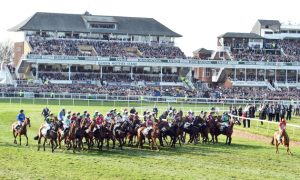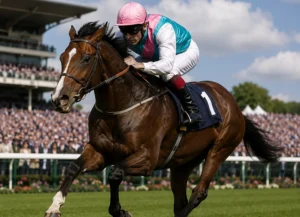
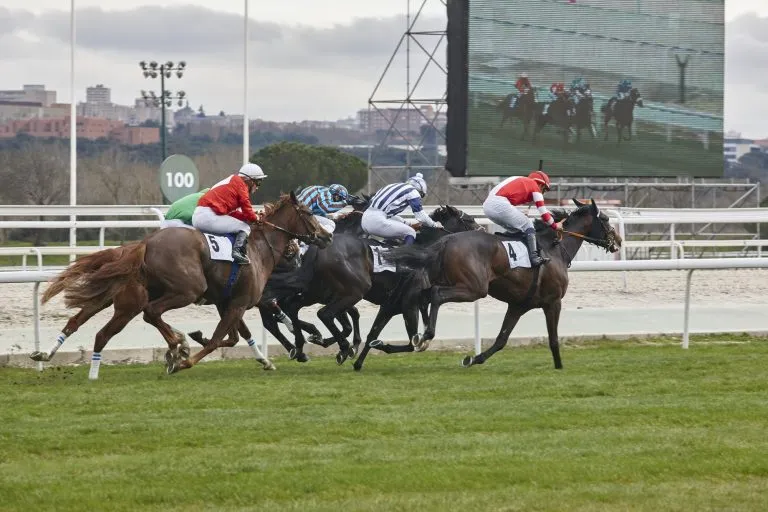
Ask any trainer why a well-fancied horse ran below expectations and there is a good chance the answer will mention the ground. In British racing the condition of the turf is called the going, and it is one of the most important factors in how a race unfolds. A horse that floats over fast ground in midsummer can look ordinary when the same track turns soft and sticky in autumn. Understanding the going will not tell you who wins, but it does explain a great deal about why form sometimes seems to make no sense.
What the going descriptions mean
On turf, the official going in Britain is described on a scale that runs from heavy at the wettest end, through soft, good to soft, good and good to firm, to firm at the driest end. Hard ground sits beyond firm but is very rarely seen at a race meeting. Courses often add detail such as “good to soft, soft in places”, because one part of a track can drain better than another. In Ireland you will also hear the term yielding, which sits roughly between good and soft.
All-weather tracks use a different scale, because the synthetic surface behaves differently from grass. Their going is usually described as standard, with variations such as standard to slow or standard to fast depending on the weather and how the surface has been prepared.
How the going is measured and declared
The clerk of the course is responsible for declaring the going. They walk the track, push a stick into the ground at different points and take account of recent rainfall and any watering. British courses also publish readings from a device called the GoingStick, which measures how firm the ground is and how easily the turf gives way. The readings are a useful guide, but the official description is still a judgement, and it can be changed on the day if heavy rain arrives or the sun dries the track out between races.
Why some horses love the mud and others need it fast
Soft ground demands more effort from every stride. Races are run at a slower pace, finishing times are longer and stamina becomes more important than raw speed. Firm ground rewards horses with a quick, efficient stride and plenty of natural speed. It is often said that horses with a high, rounded knee action cope better with soft going, while those with a low, sweeping action prefer a sound surface, although every horse is different and plenty break the rule.
Pedigree also plays a part. Some sire lines have a reputation for producing horses that handle testing conditions, while others are associated with fast-ground performers. In jump racing, courses work hard to avoid ground that is too firm, because a safe, cushioned surface matters for horses jumping at speed. That is one reason the jumps season is centred on the softer months of the year.
Using the going when you study the form
For racegoers and punters, the going is one of the first things worth checking on the day. Look at how a horse has run on similar ground in the past rather than relying on its overall record. A string of good runs on fast ground does not prove a horse will handle heavy going, and a disappointing run in the mud may be easy to forgive if the next race is on a quicker surface. Keep an eye on going changes too, because a sudden shower can lead to non-runners and change the shape of a race. Different tracks also drain and ride in different ways, which you can read more about in our guide to horse racing tracks.
If you do have a bet, the going is a reason to think, not a reason to stake more. Set a budget before the meeting and stick to it, as we explain in bankroll basics for racing fans. No amount of ground knowledge removes the uncertainty that makes racing what it is.
Conclusion
The going is a simple idea with a big influence. It decides how fast a race is run, which horses are suited and how reliable the form book is likely to be. Learn the scale, check the latest description on the day and compare it with each horse’s record, and you will understand much more about why races turn out the way they do.